Showing posts with label books. Show all posts

Friday, May 25, 2012

10 Professional Development Books for Teachers

I have a colleague whose husband is working his way through the interview process for a middle school science position at a nearby school. He caught word from a friend who is also working there that the principal just loves to ask candidates about the last book they read relating to education. My colleague came to me for advice on what her hubby should read, and since only a few titles came to mind, I turned to my Twitter followers for help. Special thanks to @AngelaStockman, @marlawitkowski, @thor_winnipeg, and @vickyloras for suggestions. Extra special thanks to @newtechnetwork for the idea to post the results of my little survey.

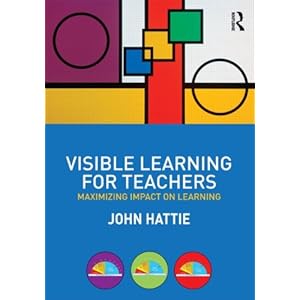
Visible Learning for Teachers
By John Hatte


Finnish Lessons: What Can the World Learn from Educational Change in Finland? 
By Pasi Shalberg


The Answer is in the Room: How Effective Schools Scale Up Student Success
 By Alan M. Blankstein


Driven by Data: A Practical Guide to Improve Instruction
 by Paul Bambrick-Santoyo


Teach Like a Champion: 49 Techniques that Put Students on the Path to College 
 by Doug Lemov and Norman Atkins


Changing the Way You Teach: Improving the Way Students Learn
By Giselle Martin-Kniep and Joanne Picone-Zocchia


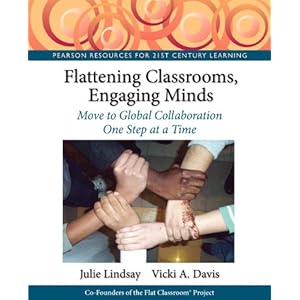
Flattening Classrooms, Engaging Minds: Move to Global Collaboration One Step at a Time 
 by Vicki Davis Julie Lindsay


The Dragonfly Effect: Quick, Effective, and Powerful Ways To Use Social Media to Drive Social Change by Jennifer Aaker, Andy Smith, Dan Ariely and Chip Heath


When Kids Can't Read: What Teachers Can Do: A Guide for Teachers 6-12 
 by Kylene Beers


The Death and Life of the Great American School System: How Testing and Choice Are Undermining Education 
 by Diane Ravitch


Save to delicious Saved by 0 users
Digg Technorati StumbleUpon Reddit BlinkList Furl Mixx Facebook Google Bookmark Yahoo
ma.gnolia squidoo newsvine live netscape tailrank mister-wong blogmarks slashdot spurl

Wednesday, March 16, 2011

Get "Free" Books with Bookmooch


I am always on the lookout for new books for my students to read in class as well as recreationally (I’ve also had success running SSR – silent sustained reading). The bookshelf in my room is home to our class library of books, and judging by the mangled bindings on some of them it is clear which are the favorites. Granted, there are others that have never been opened. I’ve struggled with this – how can I afford to replace the popular books and cycle out those that go untouched? Despite what many people in Wisconsin think, my modest teacher salary doesn’t quite support a bottomless well of extra cash for piles of new books.

I was thinking about this recently, and I remembered a website I found several years back. I took a look, and thankfully the service – and my account – was still active.

Bookmooch is a online book-trading community. Users create an inventory of books that they own but would like to get rid of. When someone requests a book from the inventory, the user sends it and then receives a credit so that he/she can request a book from someone else. Users can also create wishlists of titles if they are not currently in the Bookmooch system. If a wishlisted book gets added to an inventory, a notification email is sent out so that book can be “mooched.”

The whole process is amazingly simple. Bookmooch relies on ISBN numbers and is tied in with Amazon.com so it is easy to search and find books that are of interest. Also, books can be sent as media mail, and only costs a few bucks (I sent two books yesterday to Florida, and was only charged $2.77!).

Bookmooch is a great way to rotate your class library collection without spending a fortune on books.
Credits are received and spent with each mooched book.
Save to delicious Saved by 0 users
Digg Technorati StumbleUpon Reddit BlinkList Furl Mixx Facebook Google Bookmark Yahoo
ma.gnolia squidoo newsvine live netscape tailrank mister-wong blogmarks slashdot spurl

Tuesday, December 21, 2010

Is there a Movie for this Book? (And other frustrations with film adaptations)

The worst part of reading with students is the inevitable question that is always asked: Is there a movie for this? For ELA teachers, this is equivalent to telling Bobby Flay not to bother with dinner because you would prefer to order a pizza and wings.

Most stories we read in class do have movie adaptations – if they are good enough to dedicate class time reading, they were probably good enough for someone to make into a movie. I don't like showing the movie out of obligation, and the typical movie/book-compare/contrast activity is near worthless in my opinion. To make matters worse, the availability of a movie doesn't necessarily mean its any good. Some movie versions of books are quite awful – take the 1981 made for tv adaptation of Todd Strasser's book The Wave, for example. (After starting the movie, kids actually complained about having to finish it.) But any teacher who admits that a movie exists but refuses to show it will face a potential mutiny in his/her classroom.

So how can teachers use a movie version of a story as a valuable resource rather than a frivolous time-killer?

I was faced with this question several weeks ago after reading Shirley Jackson's classic short story, The Lottery. I was teaching a unit on setting, mood, and tone, and I felt this story would work nicely in exploring how these elements work together. The kids loved the story, but I was not sure how to wrap up the unit. The Lottery film adaptation from the 1960s is dated and kind of slow moving, but my students insisted they see it anyway.

The film version is only about 20 minutes long, and as I watched it with the class I again noticed how drawn out the story was. I realized that it could probably have been boiled down to three minutes of actual substance – and this gave me an idea.

After watching the movie, my class agreed that the movie did not do justice to the story. I told them that the final assignment for The Lottery was to create a music video that accurately portrayed the setting, mood, and tone of the story. They could use any song they'd like that they thought fit those requirements, but they only video footage they were allowed to use were clips taken from the film.

To do this, I found the complete film posted on Youtube. I downloaded it from there using Keepvid and then converted it to a usable format with Format Factory. From there, students used Movie Maker to cut and splice what they considered to be important scenes together to fit with the soundtrack.

The group took to the technical labor of this assignment much quicker than I anticipated. It was also interesting to see the variety of songs they were able to successfully apply to the film. We had everything from Tom Jones to Bob Marley, but they all managed to edit the film in such a way to meet the needs of their songs. I was impressed.

This worked especially well with The Lottery, but I could also see it being an excellent culminating project for other short stories (with bad movie adaptations) – The Tell-Tale Heart, Occurrence at Owl Creek Bridge, maybe even novels like The Outsiders, if broken down by chapter. The beauty is that all of these are available on Youtube, so finding the raw materials your students need is not very difficult.

Obviously, this treads dangerous copyright ground, so you may want to refrain from posting students' finished work. I, however, am not heeding my own warning – here is the sample project I made for my students to use as a reference. I made sure to disclose that I am not the owner of any of the materials – the song is Know Your Enemy by Green Day, and the movie is The Lottery, directed by Larry Yust.


Save to delicious Saved by 0 users
Digg Technorati StumbleUpon Reddit BlinkList Furl Mixx Facebook Google Bookmark Yahoo
ma.gnolia squidoo newsvine live netscape tailrank mister-wong blogmarks slashdot spurl

Thursday, March 4, 2010

Introduction to the Holocaust

The New York State curriculum for Social Studies is bursting at the seams. Unfortunately, the students have no other option than to get a shallow understanding of a lot of information. Take, for example the topic of World War II. The Holocaust could be a full-year course in itself, but it is usually stripped down to little more than a tangent lesson from the war.

As an ELA teacher, I try to do my part by teaching something with Anne Frank, or a novel like Wiesel’s Night or We are Witness by Jacob Boas. This year, however, I am taking a different approach. Instead of teaching the content of the Nazi horrors, I decided to focus more on the context in which these horrors occurred. I want my students to understand not only what happened, but why it happened. I want them to understand the power that Hitler had as an authority figure, and how everyday, good-hearted people allowed for the extermination of their friends and neighbors.

To start this conversation, I asked my kids a simple question: Why do we follow the rules? In every class, I received similar answers – It’s the right thing to do; We have rules to protect from harm; Breaking rules means facing a consequence.

I then shared this story about a prankster who called public places under the guise of an authority figure and persuaded people into dangerous and disruptive acts of vandalism. After they listened to the audio clip, my students were asked to explain what this prank illustrated about obedience. They were beginning to understand that people do not necessarily follow the rules, they follow the person telling them the rules.

To reinforce this idea, I then moved on to Dr. Stanley Milgram’s famous shock experiment from the early 60s. If you’re unfamiliar with this study, Wikipedia has a pretty solid overview on Milgram’s work in understanding why we obey authority figures. The actual experiment footage is over three hours long, but I managed to find a 9 minute overview that the kids found fascinating.

To end the lesson, I again returned to the original question, Why do we follow the rules and asked the class to think about what they had just learned and then answer the question again. It was amazing how firmly they grasped the concept that following rules is something that is inherent in all of us, and when prompted by authority, we will do things that go against our better judgment.

I going to continue this conversation with the novel The Wave by Todd Strasser. It doesn't take place during 1940s World War II era, but I think it will tie in easily to best show how Hitler was able to convince Germany to commit such atrocious war crimes.

Here is the Prezi presentation I used with my kids to guide them through the lesson. Feel free to use it yourself and share with others!

Save to delicious Saved by 0 users
Digg Technorati StumbleUpon Reddit BlinkList Furl Mixx Facebook Google Bookmark Yahoo
ma.gnolia squidoo newsvine live netscape tailrank mister-wong blogmarks slashdot spurl

Wednesday, September 23, 2009

Audio Books in the Classroom


Last night @nbteacher sent out a tweet alerting his followers to Lit2Go – an audio book repository created and maintained by the University of Southern Florida. It's a collection of famous poems, short stories, and larger works that have fallen into the public domain and therefore free to use and share without the fear of copyright infringement. Lit2Go took these works and had them recorded as downloadable MP3 audio books.
I find audio books to be much less interesting than real books. It’s just not the same, like having someone retell a movie. Sure, you’d know what the movie was about, but few will dispute that it’s not the same thing as experiencing the feet-sticking-to-the-floor, greasy-popcorn-fingers joy of really being there first-hand.

Regardless, I can't help but think audio books have a place in the classroom. But where?

The mp3 recordings found on Lit2Go can be readily downloaded in printable, PDF format from popular public domain sites like Gutenberg.org. I spent much of the summer browsing this site and found a few good titles, but I wasn't sure what to do with them. Lit2Go gave me an idea.

Wouldn’t it be cool if students created their own repository of audio books similar to what USF has accomplished with Lit2Go. Not only would this transfer a sense of ownership to students, but it would give them real, authentic cause to practice reading fluency.

Good idea?
Save to delicious Saved by 0 users
Digg Technorati StumbleUpon Reddit BlinkList Furl Mixx Facebook Google Bookmark Yahoo
ma.gnolia squidoo newsvine live netscape tailrank mister-wong blogmarks slashdot spurl

Saturday, August 29, 2009

4 Reasons why the Public Library is Still Important

When my wife was pregnant with our first child, we asked that our friends and family write a personal note in a copy of their favorite children's book instead of sending us greeting cards. My daughter, Sophie, is now two years old and she loves the small library that has developed in the corner of her bedroom. There's no doubt between me or my wife that we want reading to be an important and valuable part of our kids' lives, and I feel like we're off to a good start. Recently, we introduced Sophie to the public library.

I shamefully admit that before our trip, I hadn't stepped foot in a public library in more than ten years. I was of the belief that modern technology was destined to bring about the slow obsolescence of the public library. To my surprise, the library is still quite useful – and apparently I'm not the only one to have figured this out. When we got home from our trip, I made a quick poll about library patronage and posted it to twitter. Here's the results:


If you're one of the 26% who haven't been to one in awhile, here's 4 facts about modern libraries that may sway you to take the trip.

Libraries are no longer a place to collect information.
If someone needs to look up some information you probably won't find them lurking around the reference desk at the local library - especially when Google is only a few keystrokes, or even a text message away from pointing them in the right direction. The library is no longer the place to go to gather information. That's not to say that it lacks purpose. With the introduction of literature clubs, children's reading groups, even daycare, the traditional vision of the library with the large “SHHHH!” sign posted by the front desk has gone the way of the Dewey Decimal system. Instead, the Library has now become a social center, an intellectual and creative outlet for a community. That's something you won't get from Google.

Libraries are more than book repositories.
While some argue that technology is bringing about the downfall, it's clear that libraries have adopted a “If you can't beat 'em, join 'em” mentality. In addition to rows of bound books, my branch also has a section of audio books, DVDs, and even free wireless access. Patrons who neglected to bring their own laptop have the option of logging on to one of the ten or so library PCs available for public use.

Libraries have gone digital.
In addition to audio books, libraries are now beginning to dabble in E-books, and specifically cater to things like the Kindle and the iPod Touch. This comes in the form of a digital bookmobile. Users download a helper application that controls E-book selections, and “signs” them out. This digital copy is processed with an expiration date. When it expires, the digital selection is no longer able to be executed by the reader, and is “returned” the the site so other users can download it. This idea of a digital library is similar to copyright-free E-book sites such as Project Gutenberg, but is extended to many new and popular titles.

Libraries set an expectation and a lifestyle for children.
In a day and age where NCLB rules from its ivory tower, more and more emphasis seems to be getting placed on teaching the skills of reading instead of teaching the value of reading. Sure, you can argue that an illiterate can't appreciate books, but are we creating a generation that looks at To Kill a Mockingbird the same way they do the reference manual for a DVD player? During my one trip to the library I saw parents reading with their kids, and I witnessed my own daughter pull (much to the librarian's chagrin) a dozen books from the shelf before choosing the one that looked most appealing. Not only are libraries an invaluable resource, but it is sadly one of the few places still remaining where books can not only be read, but experienced.
Save to delicious Saved by 0 users
Digg Technorati StumbleUpon Reddit BlinkList Furl Mixx Facebook Google Bookmark Yahoo
ma.gnolia squidoo newsvine live netscape tailrank mister-wong blogmarks slashdot spurl