Tuesday, May 29, 2012

A "Cool" Science Experiment - DIY Air Conditioning

My house is about 60 years old. This means the attic is poorly ventilated, the walls are thin, and what little insulation that may have once existed has probably turned to clumpy wads of structural detritus. The result is that our house is consistently in the mid 80s throughout the summer. My wife and I have discussed central air a few times but there are some other home improvements that are higher priorities. So until I check a few things off my list, I'm stuck sweating it out.

Today I was looking around Instructables (which my sister-in-law accurately describes as "Pinterest for guys") and I spotted this tutorial on how to build a DIY air conditioner using a box fan, copper tubing, and an outdoor fountain pump. It was just too cool not to try. 


Here is the finished project. I zip-tied the copper tubing to the fan and then carefully attached the pump inside the styrofoam cooler. We already had the box fan, so the whole project only cost about $40. 


Before adding ice, I checked the air temperature with the fan on. Yes, that's a meat thermometer. I'm an English teacher, not a scientist. Give me a break. 


Add ice. I remember learning once that salt water has a lower freezing point, so I imagine that experimenting with that could improve the air conditioner's performance.


3.3 degrees cooler after running the pump for about 5 minutes! Ok, maybe that's not a lot, but I'd like to think of it as a starting point. I bet with some tweaks, this baby could hit the 5 degree mark.


Realistically, my homemade contraption would last about 6 minutes in a house with three kids under the age of five, so I'm taking it to school for the final days before summer recess. Not only will my students appreciate the (slightly) cooler classroom, but my DIY air conditioner practically comes with a pre-installed teachable moment about conductors/insulators, air temperature, and freezing point. What a "cool" way to review for the science final exam. 


Save to delicious Saved by 0 users
Digg Technorati StumbleUpon Reddit BlinkList Furl Mixx Facebook Google Bookmark Yahoo
ma.gnolia squidoo newsvine live netscape tailrank mister-wong blogmarks slashdot spurl

Friday, May 25, 2012

Using QR Codes to Make an Interactive Yearbook

About a year ago, I wrote a post proclaiming my excitement about QR codes in the classroom. Since that time, the little square anomalies have blown up and now appear pretty much everywhere (last weekend I even spotted one taped to the door of the place where I go to get my hair cut).

My school, too, has made strides in using QR codes. One now appears on our official school letterhead, and one is prominently displayed in the main lobby that links to a supplemental video for our online book clubs. Most notably, however, is the sudden appearance of them in this year's student yearbook.

I have worked with our art teacher and yearbook coordinator to include embedded videos in QR code form that correspond with the events that are memorialized on the pages of the yearbook. It's a way to make the yearbook a more accurate snapshot of what life was like throughout the year.

Our efforts did not go unnoticed. Local news channel, WIVB, heard about our yearbooks and did a quick segment on our use of technology to connect the physical and digital worlds. You can read their news story here or watch the story below.


Save to delicious Saved by 0 users
Digg Technorati StumbleUpon Reddit BlinkList Furl Mixx Facebook Google Bookmark Yahoo
ma.gnolia squidoo newsvine live netscape tailrank mister-wong blogmarks slashdot spurl

10 Professional Development Books for Teachers

I have a colleague whose husband is working his way through the interview process for a middle school science position at a nearby school. He caught word from a friend who is also working there that the principal just loves to ask candidates about the last book they read relating to education. My colleague came to me for advice on what her hubby should read, and since only a few titles came to mind, I turned to my Twitter followers for help. Special thanks to @AngelaStockman, @marlawitkowski, @thor_winnipeg, and @vickyloras for suggestions. Extra special thanks to @newtechnetwork for the idea to post the results of my little survey.

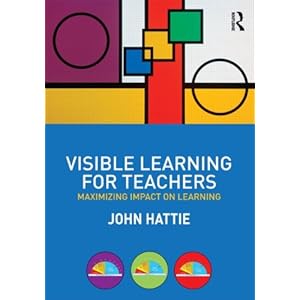
Visible Learning for Teachers
By John Hatte


Finnish Lessons: What Can the World Learn from Educational Change in Finland? 
By Pasi Shalberg


The Answer is in the Room: How Effective Schools Scale Up Student Success
 By Alan M. Blankstein


Driven by Data: A Practical Guide to Improve Instruction
 by Paul Bambrick-Santoyo


Teach Like a Champion: 49 Techniques that Put Students on the Path to College 
 by Doug Lemov and Norman Atkins


Changing the Way You Teach: Improving the Way Students Learn
By Giselle Martin-Kniep and Joanne Picone-Zocchia


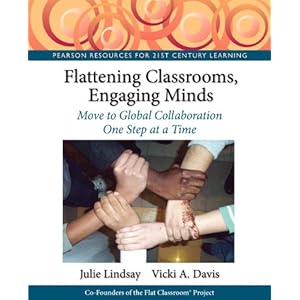
Flattening Classrooms, Engaging Minds: Move to Global Collaboration One Step at a Time 
 by Vicki Davis Julie Lindsay


The Dragonfly Effect: Quick, Effective, and Powerful Ways To Use Social Media to Drive Social Change by Jennifer Aaker, Andy Smith, Dan Ariely and Chip Heath


When Kids Can't Read: What Teachers Can Do: A Guide for Teachers 6-12 
 by Kylene Beers


The Death and Life of the Great American School System: How Testing and Choice Are Undermining Education 
 by Diane Ravitch


Save to delicious Saved by 0 users
Digg Technorati StumbleUpon Reddit BlinkList Furl Mixx Facebook Google Bookmark Yahoo
ma.gnolia squidoo newsvine live netscape tailrank mister-wong blogmarks slashdot spurl

Thursday, May 24, 2012

An Evening with Spence Rogers


I had the pleasure last week to attend a workshop with notable author and educator Spence Rogers on his unique and somewhat unorthodox approach to creating assessments. Rogers has been teaching for longer than I have been alive and the three hour workshop hardly scratched the surface of his expertise. To attempt to summarize the depth of his work here would certainly result in gross generalities and inaccuracies, but I thought I’d share a few of the highlights from the experience.

Hold Students Accountable for Each Other 

How many minutes each day do teachers spend waiting for students to come into class and take out the necessary materials? In my class, the bell rings, I give the all-call for what they need, and then wait and repeat the request to the molasses kids. They are masters of avoidance and realize a sheet of paper and a pencil can easily eat up a minute or two. Cumulatively, that’s more than a week’s worth of instruction spent waiting for students to get ready for class! Rogers suggests remedying this problem by changing the way requests are made. Rather than ask, “Please take out a piece of paper and a pencil,” instead phrase it, “Please make sure everyone around you has a piece of paper and a pencil.” This small shift makes students accountable for each other and uses positive peer pressure to get the job done.

Test the Hard Stuff 

Much of the workshop was spent discussing assessments and how to make them more meaningful. Rogers suggests a method that could loosely be described as a spiraled curriculum (although for a complete explanation, I would suggest picking up a copy of his book, Teaching for Excellence, that integrates assessments throughout rather as a milestone as the end of a unit. By continuing review and reinforcement (Rogers emphasizes that a student needs 28 interactions for real learning to take place), the easier concrete questions can be eliminated from assessments. Students will perform higher on assessments that are more difficult.

Total Response Questioning 

Total Response Questioning was a simple strategy that guarantees that all students in the class can answer a question correctly. The teacher asks the entire class to answer a question in a complete sentence and to continue repeating the answer until told to stop. From the front of the room, the teacher can monitor that all students are engaged, and it also forces every kid to answer the question (while also accumulating those 28 interactions). The result is the room erupting into a cacophony of voices. It’s a bit hokey, but it works.

 Assessment vs. Evaluation 

According to Rogers, assessments discover what students know and how lessons can be adjusted as necessary. Evaluations are used to document what students know. Interesting – In a world of high stakes student assessments and a new teacher evaluation system, it seems some high-ups in New York State could benefit from an evening with Spence Rogers.


Save to delicious Saved by 0 users
Digg Technorati StumbleUpon Reddit BlinkList Furl Mixx Facebook Google Bookmark Yahoo
ma.gnolia squidoo newsvine live netscape tailrank mister-wong blogmarks slashdot spurl

Sunday, November 20, 2011

Building a Classroom Library

This morning, Sarah Chattin posted an interesting survey on the English Companion Ning - she was interested in building a classroom library. I take great pride in the stacked bookshelves tucked in the corner of my classroom, so I decided to participate in the survey. Since the survey is a bit lengthy and I tend to ramble anyway, I decided to post my responses here rather than on the Ning reply thread.

Classroom Library Survey

What grades do you teach?
I teach 7th and 8th grade English Language Arts in a semi-rural district located near Niagara Falls, New York.

Do you have a classroom library?
My classroom library consists of about 150 books located on a bookshelf in the corner of my room. In addition, my school has multiple “book stops” located in the hallways. Students use an honor system to borrow these books.

How did you collect your books? And how do you get new ones? (Garage sales, gifts, bookstores, grants, school money, book fairs, etc.)
Up until a few years ago, I was fortunate to have a Scholastic Books warehouse located only minutes from my home. Several times a year, they would open it up to the public and liquidate inventory. In this way, I was able to purchase multiple copies of new titles for as low as 50 cents a book! Sadly, the warehouse was moved to another area, so I no longer have this as an option. Instead, I have been using online services like BookMooch to replenish and reinvigorate my class library (I wrote more about this in a previous blog post).

Do you make a point to continue adding to your classroom library?
Yes. I keep an eye on the popular book titles within my library and try to rotate out those that don't get much use. I also follow groups on Ning and Twitter to keep up-to-date with current young adult bestsellers.

What sorts of resources do you have in your library? Books (fiction, non fiction, graphic novels, etc), newspaper articles, magazines, music, movies, etc?
My library is entirely made up of books, simply because the funds are not available for subscriptions and other media. These books are primarily novels, non-fiction, and historical fiction. I try to have a selection for all my students – reading levels in my library range between 5th and 10th grade.

What materials do you wish you had?
I am currently pursuing a grant through Barnes and Noble for a class set of Nook E-Readers. I'd like to use these for independent reading as well as for books that we typically read as a full class. Not only are e-books cheaper, but they never become damaged or warn.

What books do you think should be in every classroom library?
I feel that a classroom library should establish and encourage reading enjoyment. Therefore, book topics should be diverse, of high-interest, and as current as possible.

Do you have suggestions for how a new teacher can build a library?
Keep an eye out for public library book sales. While these books usually aren't on the bestseller's list, they'll give you a foundation of materials from which to build on. For teachers looking for funding to purchase books, I would suggest Donors Choose. Many teacher have great success is securing funds for books through this site.

How do you use your classroom library?
My library is used for independent reading as well as for our school sustained silent reading (SSR) program. More info regarding SSR in this previous blog post.

Do you have a system for students to check out books or can they borrow them at will?
Students usually make a verbal request for a book. More of my books get ruined from overuse and wear-and-tear than they do from vandalism or theft, so I don't bother with a formal means of signing them out. As far as I'm concerned, students reading my books too much is a good problem to have!

What are the most popular books?
My students currently seem to be interested in trilogy or series books. The Hunger Games and Chaos Walking seem to be favorites right now.

Do you keep potentially controversial books in your library? Why or why not?
I do have books on more mature topics available to students, but I keep them tucked away in a drawer. I offer them to students who I know are responsible enough to read and enjoy them. These include copies of some of the more classic works – Fahrenheit 451, Brave New World, Animal Farm, 1984, To Kill a Mockingbird, etc.

Do you require parental permission for students to borrow certain books?
No, I do not. I have never had a problem with a parent showing concern over what their child was reading. I try to read every book that I make available to my students. This way, if a student either misunderstands or misconstrues something, I can have a well-informed conversation with him/her about the book.

What do students think about your classroom library?
Middle school students by nature will never tell you that they enjoy anything that's even remotely academic. While my students certainly don't praise my shelves of books, they recognize that they are a resource for them when they are looking for a good read.

What do you wish this survey had asked, and how would you answer?
I would be interested to know more about teachers' recreational reading habits. So often we forget that we are role models and our students will emulate our behavior. I try to make it a point to have my student see me reading for fun, or at the very least share with them what I am reading at home. I think this helps make reading feel less like a chore for them.


Save to delicious Saved by 0 users
Digg Technorati StumbleUpon Reddit BlinkList Furl Mixx Facebook Google Bookmark Yahoo
ma.gnolia squidoo newsvine live netscape tailrank mister-wong blogmarks slashdot spurl

Saturday, November 19, 2011

Anti-Bullying Campaign

In September, the suicide of Jamey Rodemeyer brought the serious issue of school bullying to the national spotlight. Not only did his name and story become associated with the popular NoH8 movement, but it even inspired Lady Gaga to dedicate a song to Jamey, who was a self-proclaimed "Gaga Monster." These events hit my school especially hard since we are located only a few miles from Jamey's hometown.

To help combat bullying, yesterday was proclaimed Anti-Bullying Day in our school. Students wore blue clothing to support the victims of bullying, and hundreds of kids signed an anti-bullying pledge inspired by Dr. Phil. To help spread our passionate message against bullying, some of my students worked together to create anti-bullying public service announcements. In the first 24 hours, they have received hundreds of hits on Youtube, and were even featured on the local evening news.

Please take a moment to view the results of their hard work, and if bullying is something your school finds to be an important issue, feel free to share the links. Our goal is to promote the message that bullying cannot be tolerated. If you're not part of the solution, you're part of the problem.


Save to delicious Saved by 0 users
Digg Technorati StumbleUpon Reddit BlinkList Furl Mixx Facebook Google Bookmark Yahoo
ma.gnolia squidoo newsvine live netscape tailrank mister-wong blogmarks slashdot spurl

Monday, November 7, 2011

How to Make a Pop Screen For Podcasting


For the past six months, I have been co-hosting a weekly podcast called The Tightwad Teacher. In addition to getting the opportunity to speak with all kinds of cool folks from around the globe, the experience has given me a chance to reflect on my own speaking skills. After each show is published, I listen back and grimace over every "um," "ah," and other lapses in good diction.

I also focus on the audio quality of the recording. Much of this is out of my hands as the sound is only as good as that particular Skype connection, but I recently became aware of the dreaded popping P and hissing S sounds that seem to plague some recordings. Keeping with the tightwad ethos of the podcast as well as some of my recent posts (like this one and this one), I decided to see if I can make a pop screen to remedy this recording problem.

Below is my easy tutorial for making a pop screen with junk you may have laying around your house.

Materials:
  • Plastic coffee can (I used Folgers, but any will do)
  • 1 Pair of women's nylon stockings (I bought a pair at the Dollar Store, but an old ripped pair will work just as well)
  • A few rubber bands
  • 1 magnetic clip
  • 1 stand (I used an extra microphone stand, but you can get creative and use whatever you have that can serve as a base)
Step 1: Using a knife or sharp pair of sheers, cut the lip off the plastic coffee can. This will serve as the frame for the pop screen.


Step 2: Cut both legs off of the stockings. Slide the coffee can frame into the stockings and then twist both ends to make the nylon taught over the frame. Rubber band each end and then trim any remaining nylon.


Step 3: Attach the magnetic clip to your newly assembled pop screen. My base was metal, so the magnet held it firmly in place without much need for adjustment.


Alternative construction: If you do not have a magnetic clip or microphone stand handy, you can easily fasten the pop screen to a box using a few safety pins pushed through the nylon and into the cardboard. It won't look as pretty as mine, but it'll do the trick!

Once your pop screen is fully assembled, simply place it between you and your microphone. I've tested mine out, and there is a noticeable reduction in pops and hisses - I can't wait to try it out during my next podcast interview!

Save to delicious Saved by 0 users
Digg Technorati StumbleUpon Reddit BlinkList Furl Mixx Facebook Google Bookmark Yahoo
ma.gnolia squidoo newsvine live netscape tailrank mister-wong blogmarks slashdot spurl